
Why Your Body Feels Tight, Restricted, and “Older” and What Chiropractic Care and Massage Therapy Can Do About It.
If you’ve ever stood up from the couch and felt your hips lock up, your spine feel compressed, or your neck refuse to turn smoothly, you’ve probably chalked it up to age. It’s one of the most common beliefs people carry into adulthood: stiffness is just a normal part of getting older.
But here’s the truth: stiffness isn’t age. It’s tissue behaviour.
Yes, age can influence how quickly the body adapts and recovers. But in most cases, stiffness is not caused by a mysterious “getting older” switch flipping on in your body. It’s typically a result of how your muscles, fascia, joints, and nervous system are responding to stress, posture, movement habits, and recovery. In other words, your tissues adapt to the demands placed on them. And when those demands involve long sitting hours, repetitive motion, poor sleep positions, or long periods without full range movement, stiffness becomes predictable. This blog breaks down what stiffness really is (scientifically), why it happens, and what can actually help. Especially through chiropractic care and massage therapy at Port Perry Wellness Centre.
What does stiffness actually mean?
Stiffness is a sensation, not a diagnosis.
When people say they feel stiff, they’re usually describing one (or more) of the following:
- reduced range of motion (movement feels limited or “blocked”)
- tightness or tension in muscles
- aching or discomfort with movement
- feeling rigid after sleep or after sitting
- a sense that your body takes time to “warm up” before it moves well
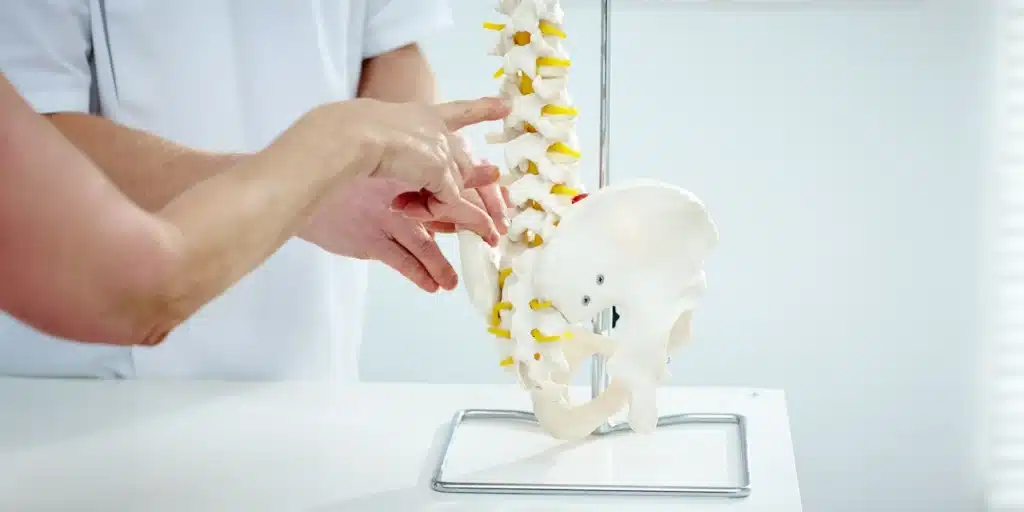
The key point is that stiffness is often linked to how tissues are behaving, not simply what your tissues are made of. Stiffness can come from muscle tone, fascia restrictions, joint mechanics, inflammation, nervous system guarding, reduced hydration in tissues, or even repetitive micro stress. Most commonly, it’s a combination, which is why generic stretching sometimes doesn’t solve the issue.
The science of tissue behaviour: your body adapts to what you do most
Your tissues are not static. They’re adaptive.
Your muscles, fascia, and joint structures continuously remodel based on what you repeatedly ask them to do. If your daily movement is small, repetitive, or limited, your body will become very efficient at that pattern, and less prepared for anything outside it. That’s where stiffness begins: when the body becomes highly adapted to limited movement and constant low grade tension.
Tissue behaviour is influenced by:
1) Load: How much stress or force your tissues handle. This includes lifting, repetitive tasks, standing long hours, or sudden bursts of activity.
2) Position: How long your body stays in a specific posture. Sitting at a desk, looking down at devices, driving, or sleeping in a curled position can all influence tissue tension and joint movement over time.
3) Movement variety: Humans are built for variability like bending, reaching, twisting, walking, squatting. When the body doesn’t experience variety, it starts to feel “stuck.”
4) Recovery: When recovery is poor (stress, dehydration, poor sleep, inflammation), tissues become more sensitive and reactive.
So the question isn’t: “Am I just old now?” It’s: “What have my tissues adapted to and what are they now trying to protect me from?”
The hidden role of fascia in stiffness
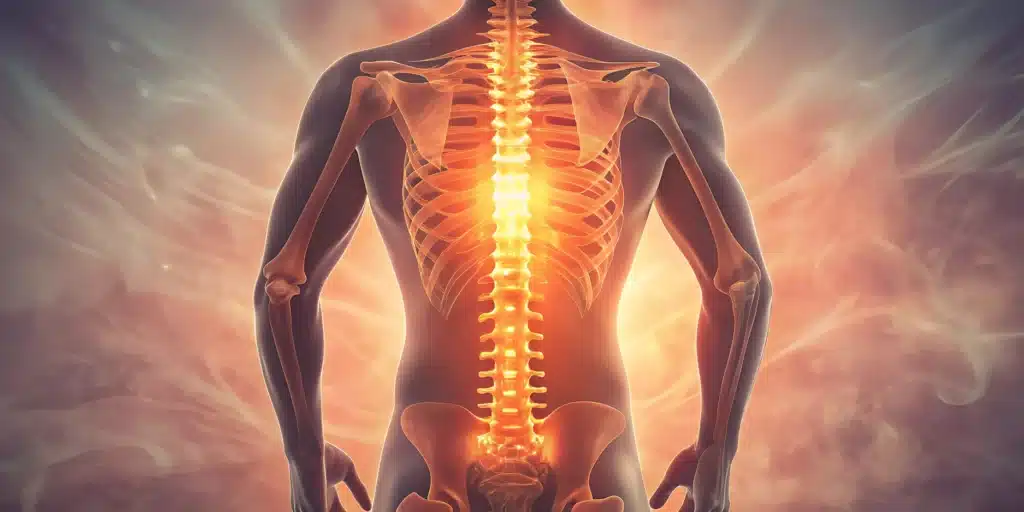
Fascia is the connective tissue web that wraps around muscles, stabilizes joints, and helps transmit force through the body. It is rich in sensory receptors, meaning it plays a huge role in how the body feels.
Fascia responds to:
- movement
- hydration
- stress hormones
- repetitive strain
- inflammation and injury
When fascia becomes restricted or sensitized, it can create:
- pulling sensations
- “stuck” areas that don’t stretch easily
- stiffness that feels deeper than muscle tightness
- movement that feels “limited,” even when strength is normal
This is one reason stiffness doesn’t always improve with stretching alone. If fascia is reactive or dehydrated, tissues may feel tight even if the muscle itself isn’t shortened.
Massage therapy can play an important role here, because it helps reduce tissue tone, improve fluid movement in tissues, and calm the nervous system response that maintains tension.
Your nervous system may be the real reason you feel tight
One of the most important (and overlooked) truths about stiffness is this: Stiffness is often a nervous system response.
Your body uses muscle tone and restriction to create safety. If your brain interprets a joint as unstable, a movement pattern as risky, or tissues as overloaded, it may increase stiffness through protective guarding. This can happen even when imaging tests show nothing “wrong.”
Common triggers for nervous system driven stiffness include:
- high stress or anxiety
- chronic pain history
- poor sleep
- past injury
- working through pain repeatedly
- long periods without movement
This is why stiffness can be worse in the morning, worse after long days, or worse during stressful seasons. The nervous system isn’t just “in your head” it’s literally controlling tone, tension, and sensitivity.
Both chiropractic care and massage therapy can support the nervous system by improving movement input and reducing protective tension patterns.

Joint stiffness vs muscle stiffness: why it matters
Not all stiffness is the same.
Muscle dominant stiffness tends to feel like:
- knots, tight bands, soreness
- tightness that changes after movement
- relief after massage or heat
- discomfort that responds to pressure
Joint dominant stiffness tends to feel like:
- a “block” or restriction
- less smooth movement, reduced mobility
- discomfort with rotation, bending, or extension
- stiffness after inactivity
- feeling like you can’t access full range
This matters because treatment approaches differ. If stiffness is mostly joint-based, stretching muscles alone may not help. That’s where chiropractic care can be valuable: supporting joint mobility and improving movement mechanics to reduce protective tension!
What helps stiffness long term? (Hint: it’s not just stretching)
Lasting stiffness relief isn’t achieved by doing the same 2 stretches forever. Most people need a plan that includes:
- Restoring joint mobility: Improving how your joints move so your body can bend, twist, and function without restriction.
- Improving soft tissue behaviour: Helping muscles and fascia relax, recover, and respond better to daily load and movement.
- Reducing protective guarding: Calming the nervous system so the body doesn’t stay in a “tight and tense for safety” pattern.
- Rebuilding movement confidence: Teaching the body it’s safe to move again so stiffness doesn’t keep returning.
- Improving strength and stability where needed: Building supportive strength so joints feel secure and tissues don’t overcompensate.
- Addressing posture and work habits: Adjusting daily patterns that create stiffness so treatment results last longer.
That’s why the most effective approach for many people includes both chiropractic care and massage therapy, each supporting a different part of the stiffness loop.
How Port Perry Wellness Centre can help
At Port Perry Wellness Centre, stiffness is approached as a whole body pattern, not a single tight muscle.
Chiropractic care can help by:
Chiropractic care supports joint mobility, spinal mechanics, and movement function. When joints move better, the nervous system often reduces protective muscle tone. This can improve range of motion, reduce stiffness, and help you move more confidently in daily life. For many people, chiropractic care also helps address contributing factors like posture patterns, movement restrictions, and compensations that build up over time.
Massage therapy can help by:
Massage therapy helps reduce muscle tension and soft tissue sensitivity, improves circulation, and promotes recovery in overworked tissues. It can also help reduce stress related tension and support down regulation of the nervous system, a critical piece for people whose stiffness is tied to chronic stress or long term guarding. When used together, chiropractic care and massage therapy often create a more complete outcome: improved mobility plus better tissue quality and recovery.
Ready to move better?
Stiffness is not a character flaw, and it isn’t a life sentence. It’s often simply a sign that tissues have adapted to a set of repeated demands, and your nervous system is trying to keep you safe. Once you understand that stiffness is tissue behaviour, you can stop treating it as inevitable and start treating it as something modifiable.
If stiffness is limiting your day to day life; whether it’s your back, neck, hips, shoulders, or jaw. Port Perry Wellness Centre can help you identify what’s driving it and build a plan that supports mobility, comfort, and long term function. Book an appointment at Port Perry Wellness Centre to explore whether chiropractic care, massage therapy, or a combined approach is right for you!
